



Success stories
Skid-mounted steam sterilizer for disinfecting seedling trays
Project Description
A large-scale horticultural nursery needed to incorporate steam into a new tray washing tunnel, featuring a continuous and stable flow rate, easy integration into a production facility, autonomous operation, and protection of the boiler against tap water.

Original Situation
What challenges did the client present us with?
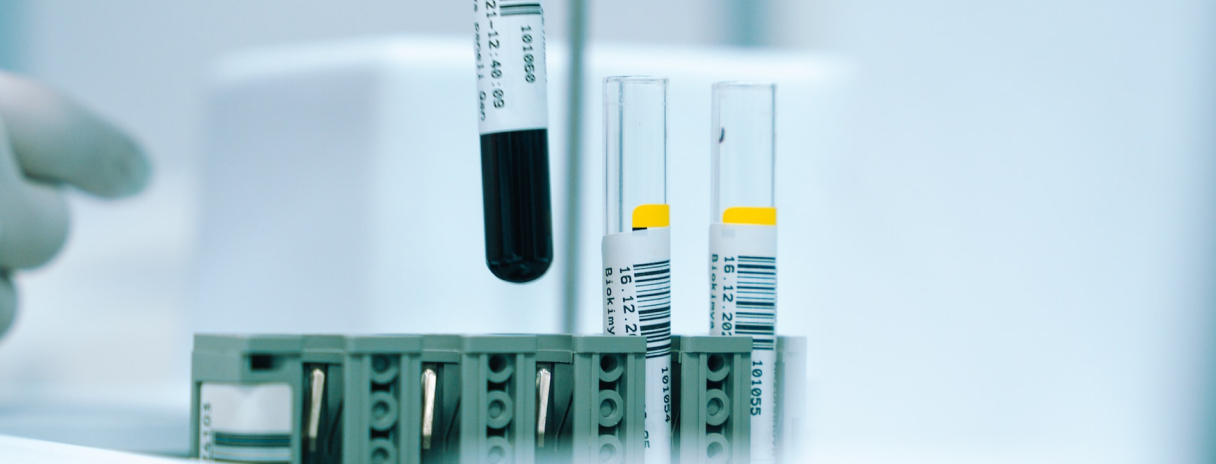
One of Europe’s largest vegetable-producing groups operates a large-scale plant nursery in the Region of Murcia. There, it produces millions of seedlings each growing season in cell trays, which are reused cycle after cycle. Between one planting and the next, each tray must be washed and disinfected to remove traces of growing medium, roots, and any pathogens that could be carried over to the next batch. In a nursery, a poorly sanitized tray is a direct route of contamination for the entire crop.
The customer decided to incorporate steam into its tray-washing process. To do so, it designed a new, thermally insulated washing tunnel to make the most of the steam’s energy. That tunnel required a steam source that met several conditions at once:
– A continuous and stable flow rate. It had to supply multiple application points simultaneously—at the tunnel’s entrance and exit—without any pressure drops throughout the entire washing shift.
– Easy integration into an agricultural facility. The equipment was not going to be installed in a boiler room, but rather in a production facility. A compact unit was needed—one that would arrive ready to plug in and require as little installation work as possible.
– Autonomous operation. It was to be operated by seed plant staff, not specialized steam technicians. Water treatment, blowdowns, and control functions had to operate automatically.
– Protection of the boiler against tap water. The available water could not enter the boiler directly without prior treatment to ensure its service life.
– Legalization. Since this is a pressurized system, the installation had to be registered with the Autonomous Community’s Department of Industry.
Solution Provided
Steam solution developed ad hoc by Giconmes
Proposed Solution
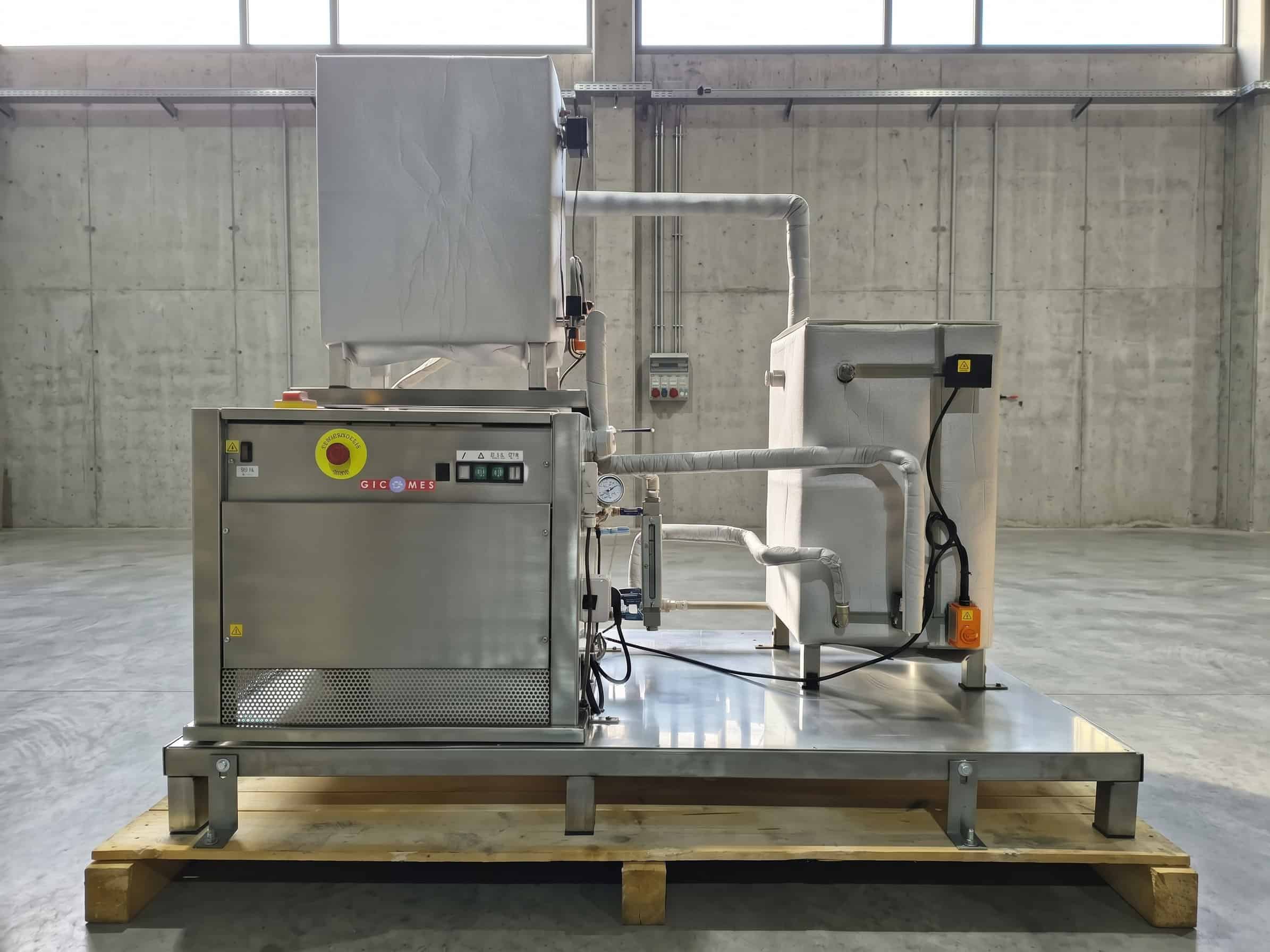
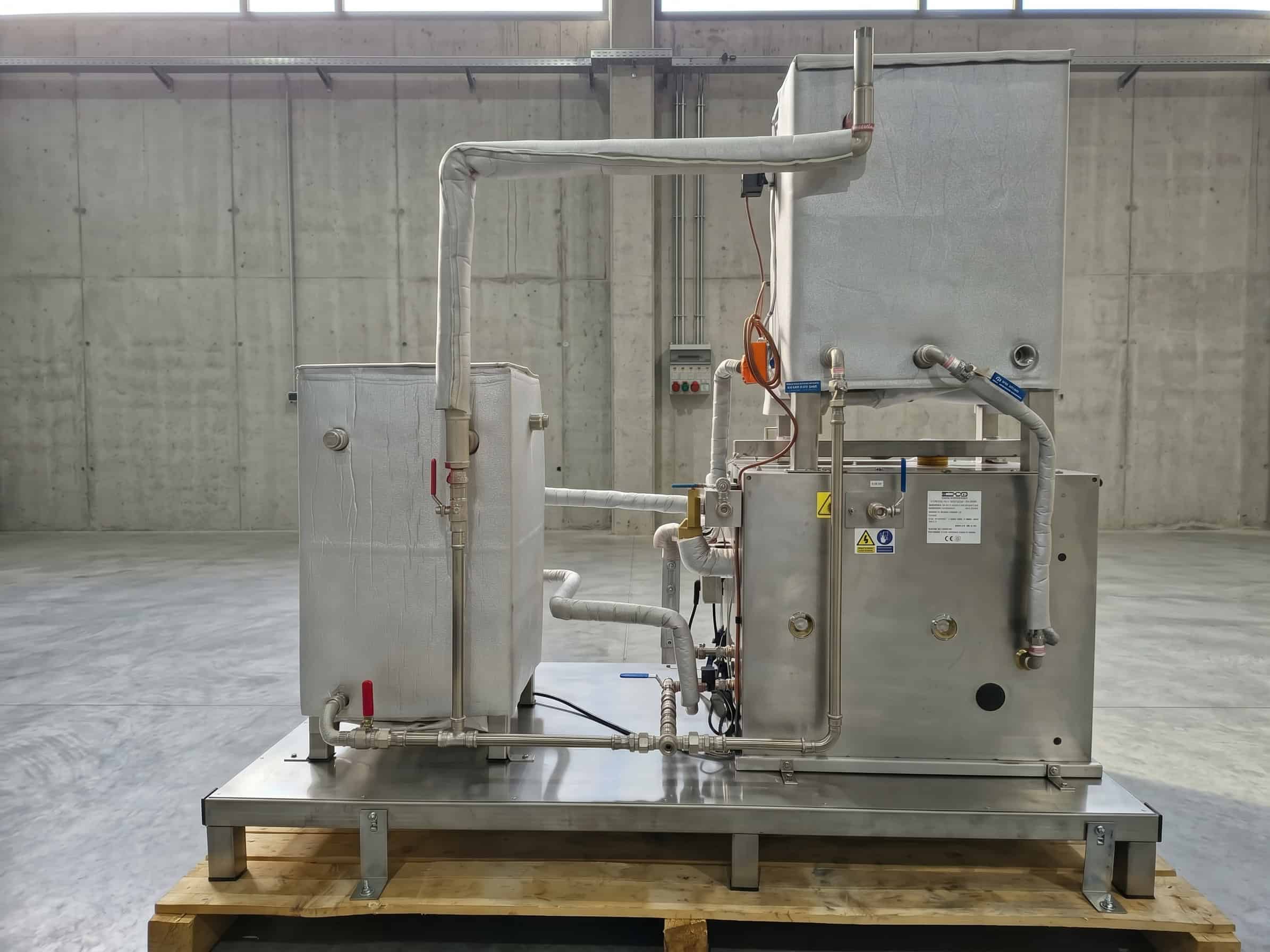
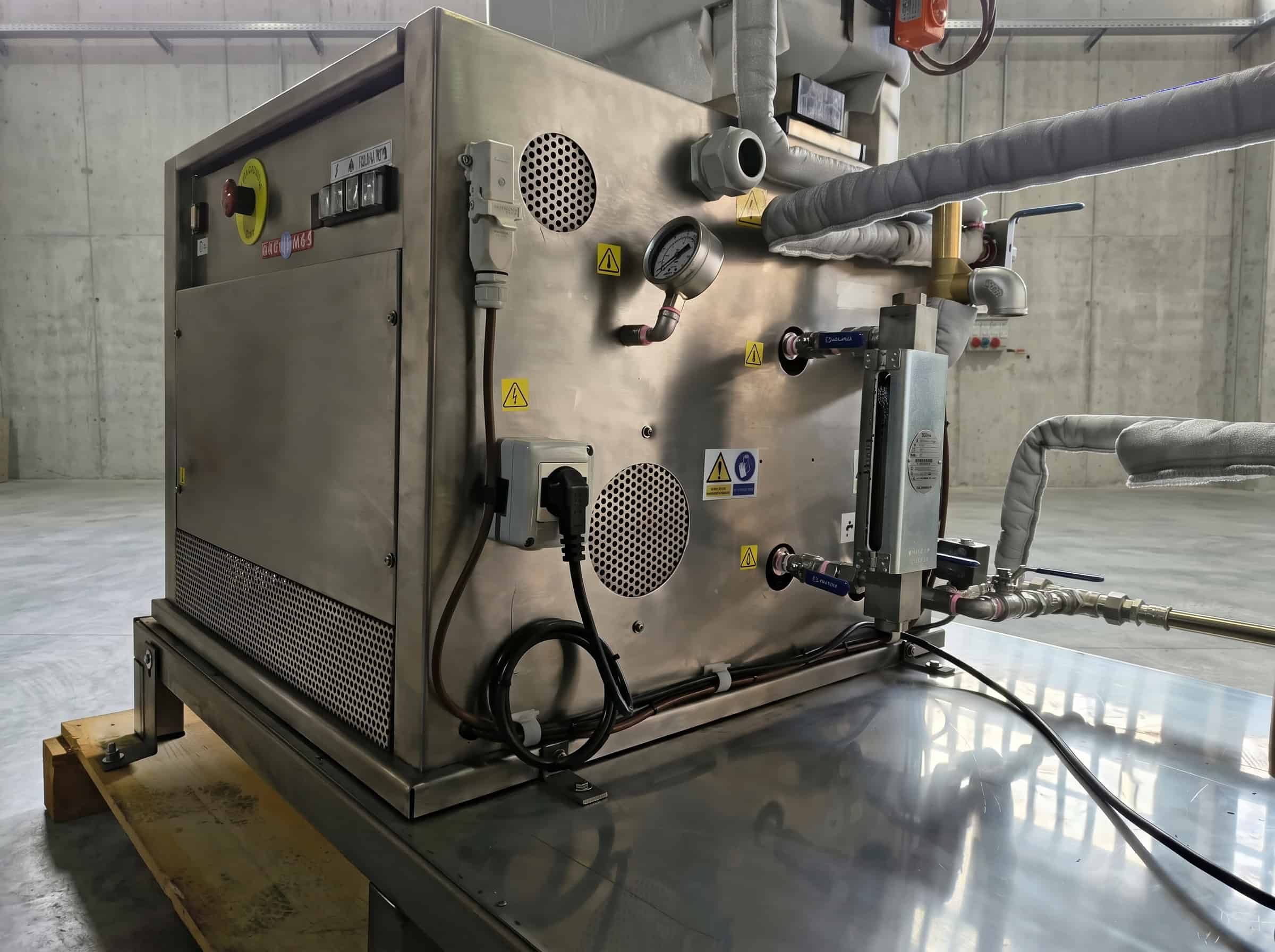
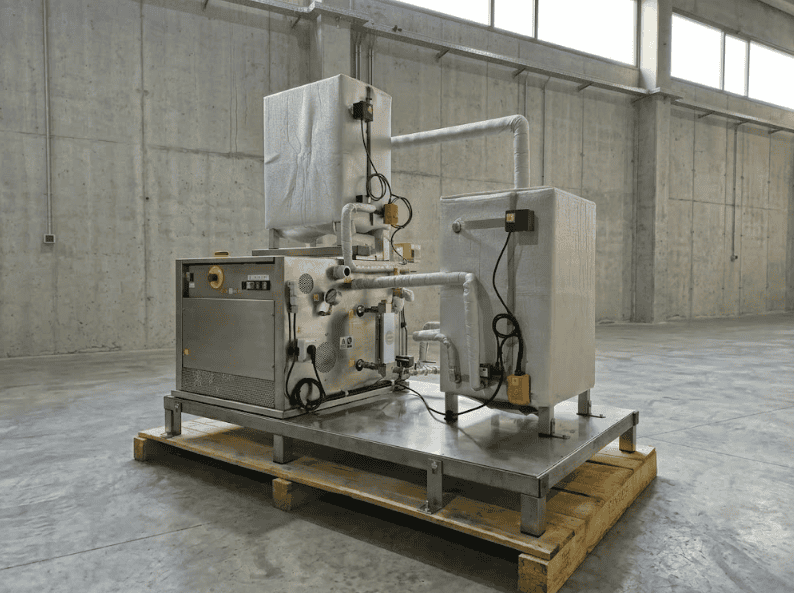
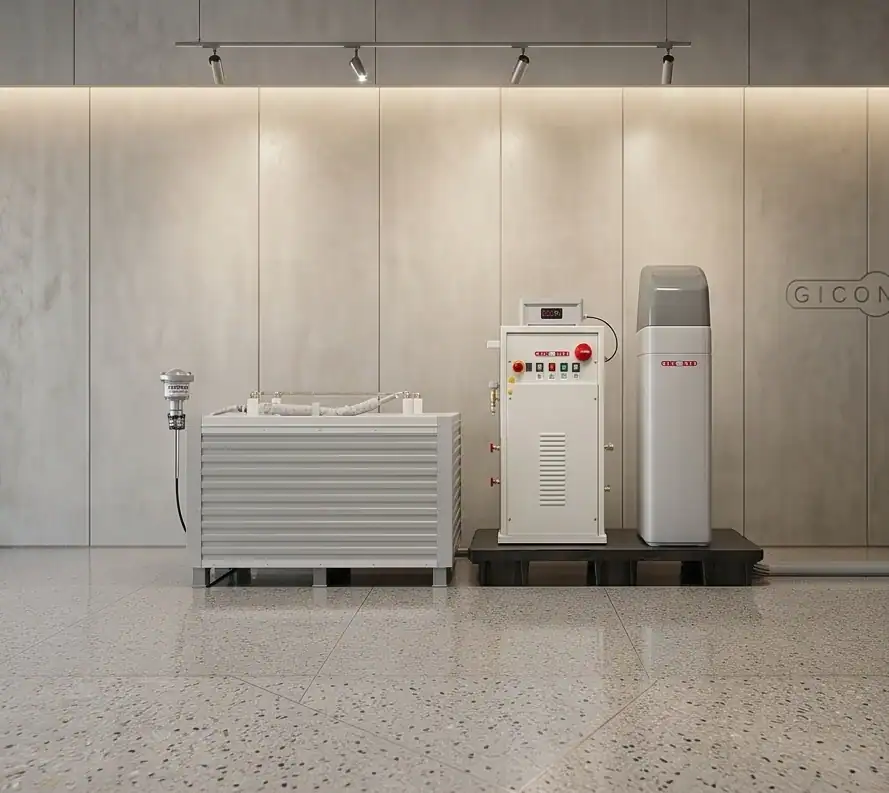
After conducting tests at our plant and making two visits to the nursery, Giconmes proposed an NGV-6060 skid-mounted electric steam generator: a complete, self-contained steam plant, ready to supply the car wash tunnel.
The NGV-6060 produces up to 82 kg/h of steam at 8.5 bar and 178 °C. Its 60 kW is distributed across two 30-kW heating elements, allowing it to operate at half power when demand is low. All components in contact with water are made of AISI 304 stainless steel.
The same platform integrates the water softener with automatic regeneration, the automatic drain valves, and the condensate tank. The unit arrives fully assembled and tested; all that’s needed at the nursery is to connect the water supply, drain, and electricity. Steam is delivered to the tunnel via a quick-connect hose with thermal protection, which also carries the temperature control wiring.
The proposal included thermal stress testing of the trays, coordination with the client’s engineering team, installation, commissioning, training, and registration of the equipment with the Ministry of Industry.
Technology Used
- NGV-6060 skid-mounted electric steam generator, up to 82 kg/h of steam at 8.5 bar and 178 °C, with 60 kW provided by two 30-kW heating elements
- Water Softener with Automatic Regeneration
- Automatic drains
- Condensate tank
CHALLENGES
We meet our clients’ requirements
1. Plug-and-play and turnkey. The steam plant is delivered fully assembled and tested; all that’s needed at the nursery is to connect the water, drain, and electrical lines. Giconmes also handles installation, commissioning, training, and registration with the Ministry of Industry.

2. High flow rate with low power consumption. It produces up to 82 kg/h to supply the entire tunnel with stable pressure. Its two 30-kW stages allow it to operate at half power when the process does not require maximum flow.

3. Minimal maintenance. Water treatment and automatic blowdowns protect the boiler and extend its service life without the need for intervention by plant personnel.

4. Chemical-free disinfection. Steam sanitizes the trays through heat, leaving no residue that could affect the next planting.
Do you need a customized solution?
We help you define what type of installation you need
There are no emissions beyond those produced during the electricity production process. Consequently, emissions can be neutral depending on the electricity mix. Electric steam boilers are the present and the future.
Absolutely. In fact, it is recommended to achieve maximum efficiency. There is no problem with remote control as long as it complies with current regulations.
A steam generator is a pressure vessel that, together with the piping network, is subject to regulatory control and complementary technical instructions, according to the regulations published in Royal Decree 809/2021, of September 21. Maintenance is divided into a part that can be easily fulfilled by the owner:
- Understand and follow the manufacturer’s instructions regarding use, safety measures, and maintenance.
- Do not put the installation into service or allow pressure equipment to operate if the requirements of the Regulation are not met.
- Having at least the following documentation for the pressure equipment while they are installed: Declaration of conformity, manufacturer’s instructions (if applicable), and, if necessary, installation certificate, along with other supporting documentation (such as installation project, record of the last periodic inspection, certifications of equipment repairs or modifications, and any other documentation required by the relevant technical instruction complementary to this regulation). For detailed contents, refer to Annex IV of the regulation. Making this documentation available to the competent authority of the autonomous community and the companies responsible for maintenance, repair, or periodic inspections.
- Use pressure equipment within the operating limits specified by the manufacturer and take it out of service if it no longer meets the necessary safety requirements.
- Maintain facilities, pressure equipment, safety accessories, and control devices in accordance with operating conditions and the manufacturer’s instructions, and inspect them at least once a year.
- Arrange for the corresponding periodic inspections to be carried out in accordance with the provisions of Article 6 of the regulation.
- Having and maintaining an up-to-date record of pressure equipment categories I to IV, as defined in RD 709/2015, of July 24, or equipment similar to these categories according to Article 3.2 of the regulation, as well as their installations.
It is known that by applying heat to water, it transforms into steam at the boiling point and atmospheric pressure. From there, depending on the required saturation degree of steam for its proper application, we need to increase the pressure to obtain a higher temperature. To change the temperature and saturation degree of steam, we always need to modify the pressure.
It is a unit of pressure equivalent to 1 kg/cm2, 0.98 atmospheres, or 14.50 PSI.
Haven't found the answers to your questions?
Send us a question or download all the information
USES OF STEAM IN INDUSTRY AND OTHER BUSINESSES
Other similar success stories involving the use of steam

The use of steam is gaining popularity in various industries due to its effectiveness and environmental benefits.
In our “Success Stories” section, you can learn more about companies that have adopted this technology and achieved successful results in terms of efficiency and sustainability. Click on the success stories to learn more.
Situación original ¿Qué retos nos planteó el cliente? Un cliente del sector agrícola se planteaba la puesta en marcha de un nuevo vivero y necesitaba incorporar un sistema para la desinfección térmica del sustrato antes de su uso en la producción de planta. El objetivo era eliminar patógenos, semillas de malas hierbas y organismos indeseados […]

Situación original ¿Qué retos nos planteó el cliente? Un fabricante de ingredientes naturales estaba construyendo una nueva planta de producción y necesitaba incorporar un sistema de generación de vapor limpio capaz de alimentar simultáneamente 4 reactores. Cada reactor requería un caudal de 80 kg/h de vapor, lo que suponía una demanda total de 320 kg/h. […]