



Success stories
Steam Disinfection of Growing Media: A Real-Life Case Study at a Nursery
Project description
A client in the agricultural sector needed to thermally disinfect the growing medium for a new nursery, eliminating pathogens, weed seeds, and unwanted organisms without the use of chemicals, using a simple and efficient solution to treat between 1,500 and 5,000 liters annually in batches, powered by solar energy and designed for the lowest possible energy consumption.

Original situation:
Challenges posed by the client:
A client in the agricultural sector was considering setting up a new nursery and needed to implement a system for the thermal disinfection of the growing medium before using it in plant production.
The goal was to eliminate pathogens, weed seeds, and unwanted organisms present in the soil, ensuring a clean and safe growing medium for the development of the seedlings, without resorting to chemicals or treatments that would compromise the farm’s sustainability.
In this initial phase, the treatment requirements were moderate and clearly defined: the nursery planned to disinfect approximately 1,500 liters of growing medium in the first year, with a short-term growth projection of up to 5,000 liters per year as plant production increased.
Since this was a one-time operation (a single disinfection campaign per year), the client was in no rush: they could easily accept that the process would take one or two weeks, treating the substrate in batches in an insulated container that we were to manufacture.
The approach also took into account energy efficiency and self-sufficiency: the facility would be powered by solar energy, so it was essential to limit electricity consumption to the absolute minimum necessary to meet these requirements.
Ultimately, the customer was looking for a simple solution, tailored to its actual volumes and with the lowest possible energy consumption, to avoid oversizing equipment for a demand that, for now, was limited and seasonal.
Proposed solution:
Customized steam solution developed by Giconmes.
Proposed solution:
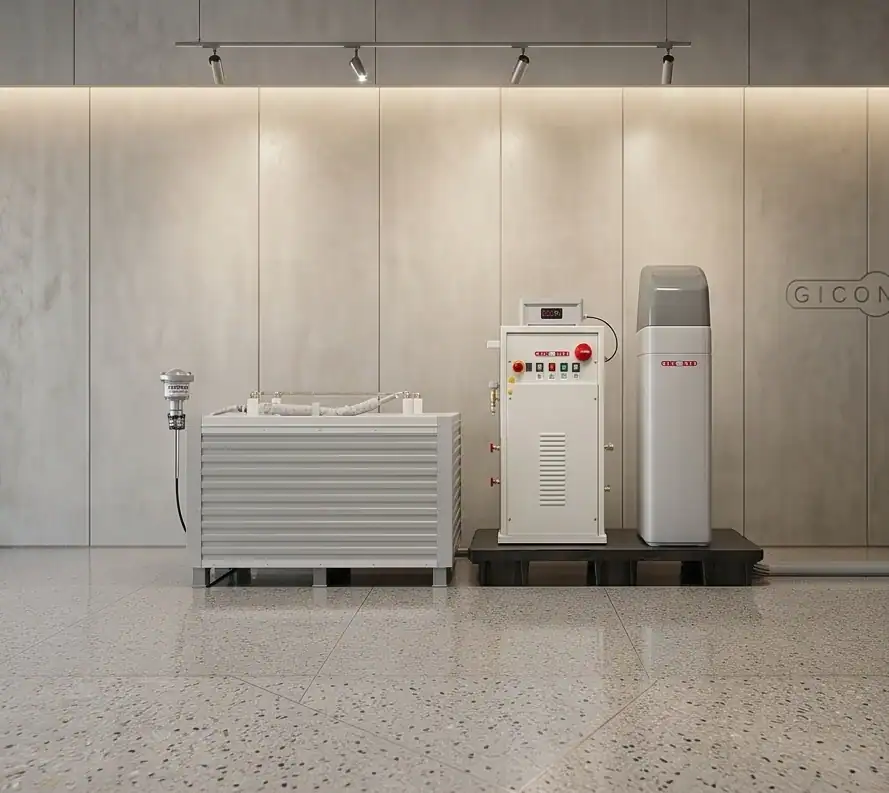
After analyzing the actual treatment volumes and the seasonal nature of the operation, Giconmes designed a compact steam-based thermal substrate disinfection system, tailored precisely to the customer’s needs and with the lowest possible electricity consumption.
The operating principle is simple and robust: the substrate is processed in batches inside an insulated vessel into which steam is injected in a controlled manner.
The steam raises the temperature of the entire soil mass to the level needed to eliminate pathogens, weed seeds, and unwanted organisms, without the need for chemicals and without generating waste that requires subsequent environmental management.
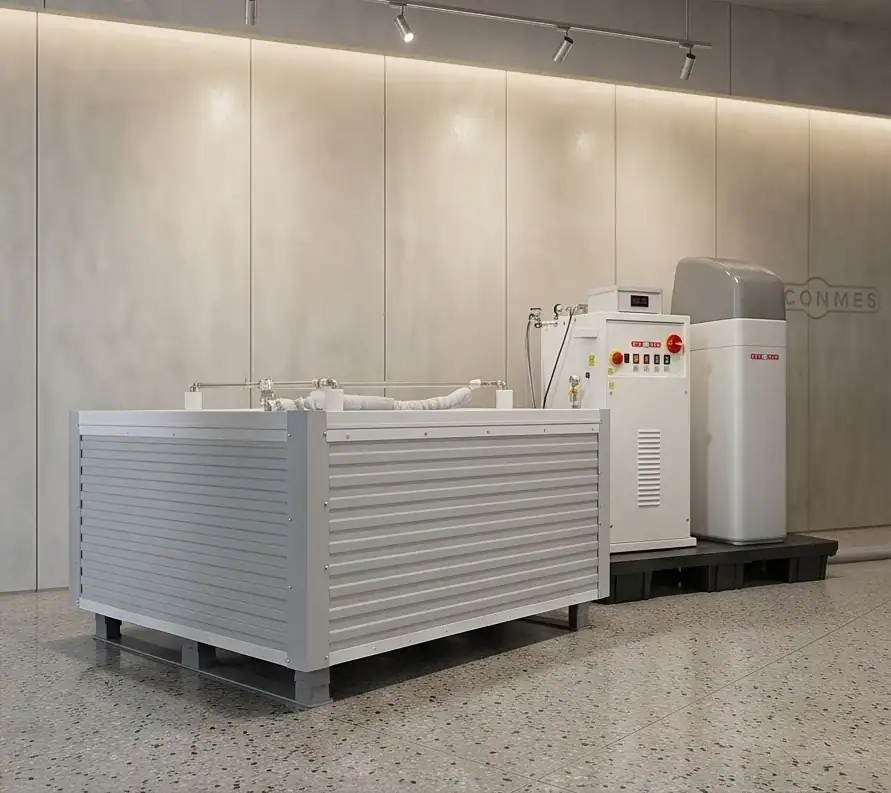
The equipment supplied consists of:
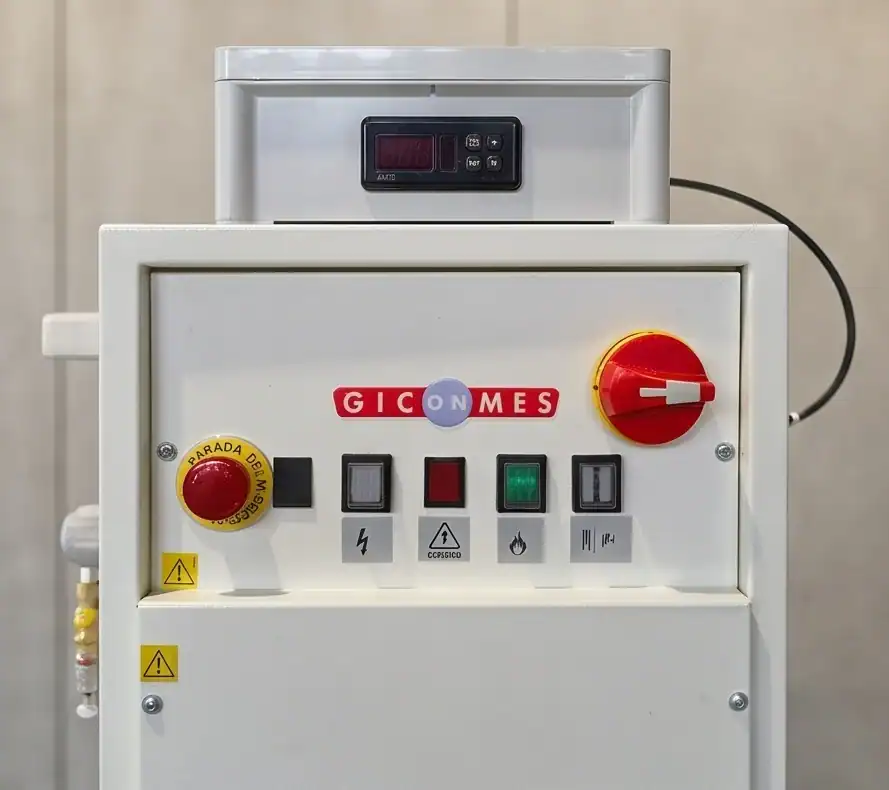
- NGV-1708 Electric Steam Generator (8 kW). A fully automatic generator, powered exclusively by electricity, that is fully compatible with the customer’s planned photovoltaic system . Compared to the 9 kW capacity initially considered, an analysis of the process allowed the solution to be adjusted to 8 kW, further reducing energy consumption. Its dual electric heaters allow it to operate at 50% capacity when demand permits, resulting in additional energy savings.
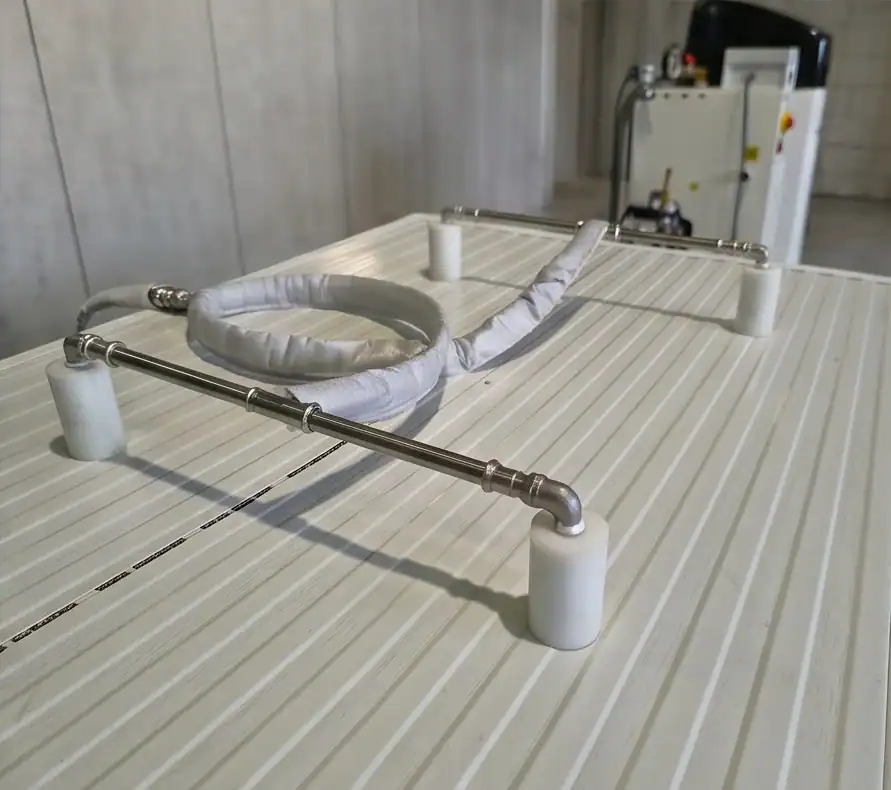
- 0.5 m³ insulated container. Thermally insulated to minimize heat loss during treatment, optimize energy consumption, and ensure uniform temperature distribution throughout the substrate mass.
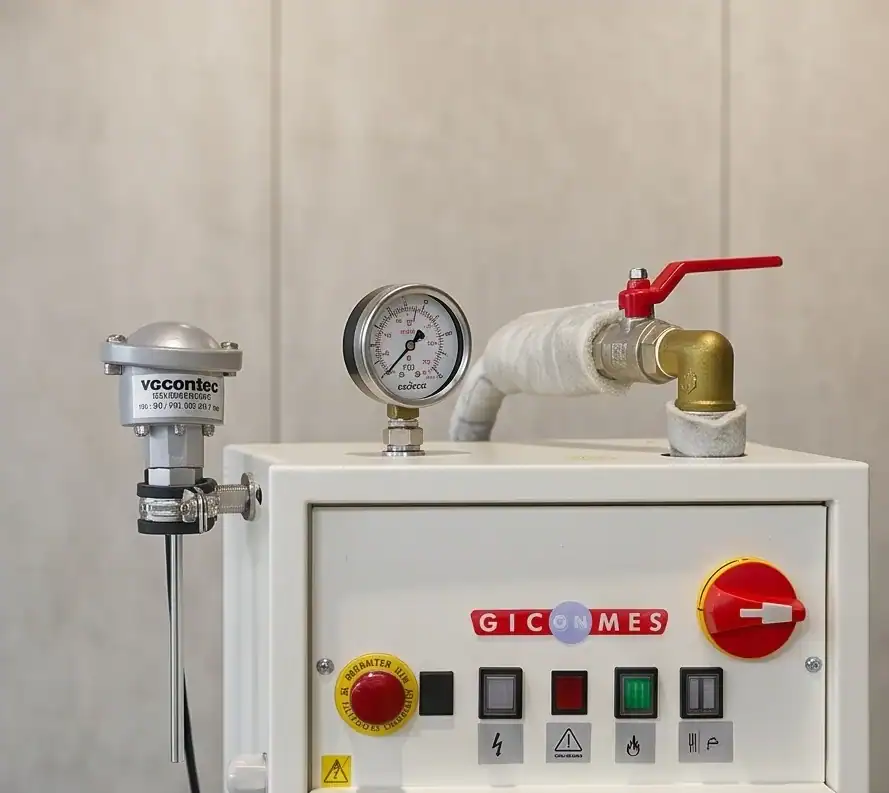
- Steam lance distribution system with a temperature probe. The steam is distributed through four lances that ensure coverage of the entire soil mass, while the probe allows the substrate temperature to be monitored at all times and ensures that the disinfection threshold is reached.
- Water treatment system. A water softening system that reduces the hardness of the feed water to acceptable levels, protecting the boiler and ensuring its long-term durability.
- Skid-mounted platform on a Euro pallet. The generator and water treatment equipment are mounted on a platform that allows the entire unit to be moved safely within the facility.
Technology used:
- NGV-1708 8-kW electric steam generator.
- 0.5 m³ insulated container.
- A diffusion system using four steam nozzles.
- Built-in temperature sensor.
- Water treatment and skid-mounted platform on a Euro pallet.
CHALLENGES
We meet customer requirements
The installation fully met the objectives set by the client. Among the key results are:

100% thermal disinfection, chemical-free. The treatment is performed using only steam, eliminating pathogens, weed seeds, and unwanted organisms without the use of chemicals. This eliminates contaminating residues, removes the need for associated environmental management, and provides a clean and safe growing medium for plant development.

A 100% electric solution compatible with solar power. Since it is a system powered exclusively by electricity, it integrates seamlessly with the customer’s solar power system, reducing operating costs and supporting carbon-free, self-sufficient operations.

Custom sizing and minimal power consumption. The equipment was strictly adjusted to the actual treatment volumes, reducing the power from the initial 9 kW to 8 kW. The insulated tank and the dual heater, which allows operation at 50% power, minimize heat loss and optimize energy consumption during each campaign.

Scalability without changing the installation. The NGV-1708 generator can be reconfigured for power outputs of up to 15 kW, thereby supporting the nursery’s projected growth—from 1,500 liters in the first year to 5,000 liters in the future—without the need to replace the equipment, thereby protecting the customer’s investment.
Do you need a customized solution?
We help you define what type of installation you need
There are no emissions beyond those produced during the electricity production process. Consequently, emissions can be neutral depending on the electricity mix. Electric steam boilers are the present and the future.
Absolutely. In fact, it is recommended to achieve maximum efficiency. There is no problem with remote control as long as it complies with current regulations.
A steam generator is a pressure vessel that, together with the piping network, is subject to regulatory control and complementary technical instructions, according to the regulations published in Royal Decree 809/2021, of September 21. Maintenance is divided into a part that can be easily fulfilled by the owner:
- Know and apply the manufacturer’s instructions regarding use, safety measures, and maintenance.
- Not to put the installation into service or prevent the operation of pressure equipment if the requirements of the Regulation are not met.
- Having at least the following documentation for the pressure equipment while they are installed: Declaration of conformity, manufacturer’s instructions (if applicable), and, if necessary, installation certificate, along with other supporting documentation (such as installation project, record of the last periodic inspection, certifications of equipment repairs or modifications, and any other documentation required by the relevant technical instruction complementary to this regulation). For detailed contents, refer to Annex IV of the regulation. Making this documentation available to the competent authority of the autonomous community and the companies responsible for maintenance, repair, or periodic inspections.
- Use the pressure equipment within its intended operating limits as specified by the manufacturer and take it out of service if it no longer meets the necessary safety requirements.
- Perform maintenance on the installations, pressure equipment, safety accessories, and control devices in accordance with the operating conditions and manufacturer’s instructions, and examine them at least once a year.
- Arranging for the necessary periodic inspections as required by Article 6 of the regulation.
- Having and maintaining an up-to-date record of pressure equipment categories I to IV, as defined in RD 709/2015, of July 24, or equipment similar to these categories according to Article 3.2 of the regulation, as well as their installations.
It is known that by applying heat to water, it transforms into steam at the boiling point and atmospheric pressure. From there, depending on the required saturation degree of steam for its proper application, we need to increase the pressure to obtain a higher temperature. To change the temperature and saturation degree of steam, we always need to modify the pressure.
It is a unit of pressure equivalent to 1 kg/cm2, 0.98 atmospheres, or 14.50 PSI.
Haven't found the answers to your questions?
Please send us a question or download all the information
USES OF STEAM IN INDUSTRY AND OTHER BUSINESSES
Other similar success stories using steam

The use of steam is gaining popularity in several industries due to its efficiency and environmental benefits..
In our "Success Stories" section, you can discover more about companies that have adopted this technology and have achieved successful results in terms of efficiency and sustainability. Click on the success stories to learn more details.
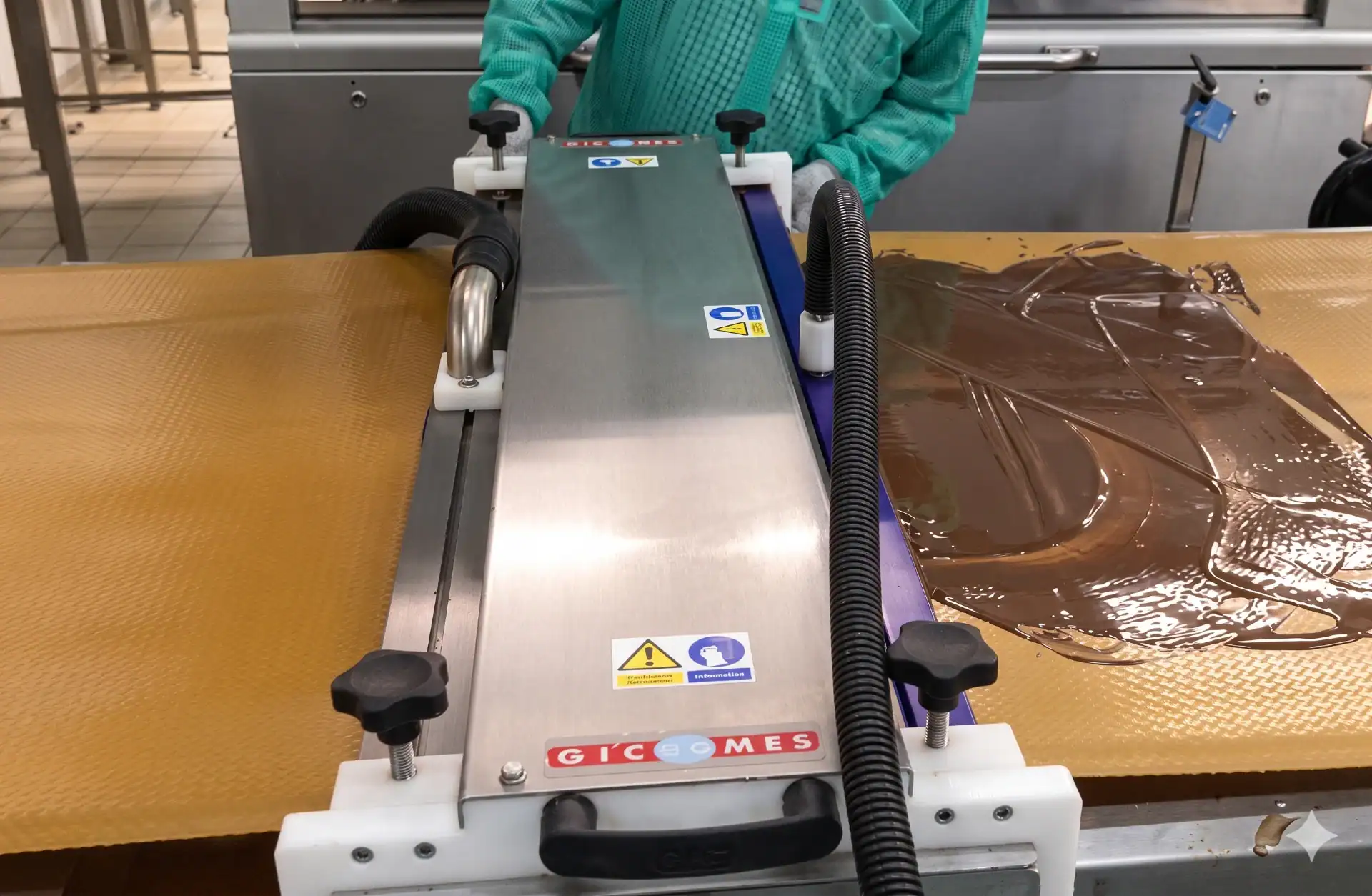
Situación original ¿Qué retos nos planteó el cliente? Un fabricante de chocolate y derivados del cacao contaba en su planta con un transportador de lona de gran longitud (cerca de 50 metros) cuya limpieza era una de las operaciones más exigentes del proceso. Los residuos de chocolate, cacao y grasas se adhieren con fuerza a […]

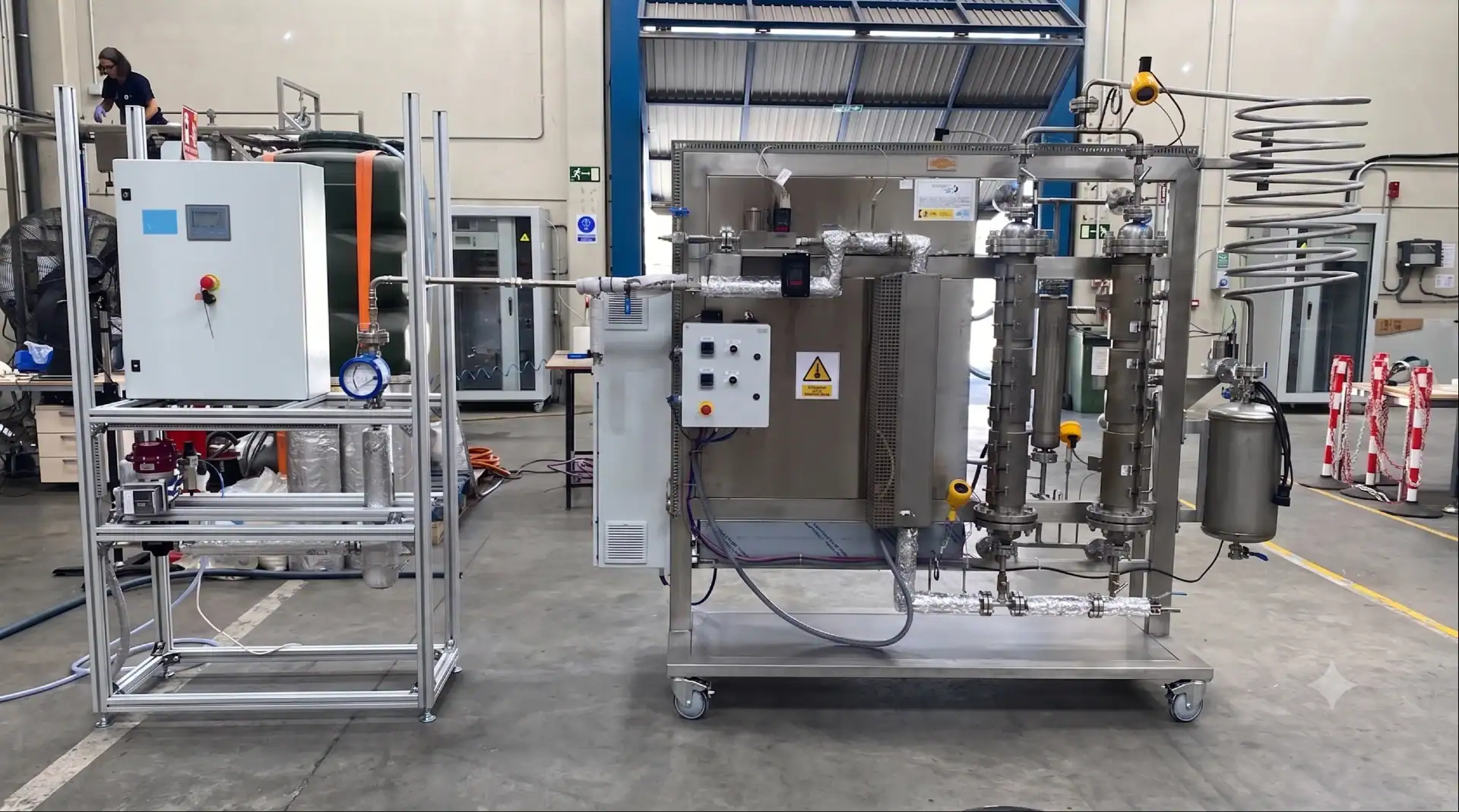
Situación original ¿Qué retos nos planteó el cliente? Un centro tecnológico de referencia, inmerso en el desarrollo de procesos avanzados de valorización de syngas (gas de síntesis) para la producción de hidrógeno y metano, necesitaba integrar un sistema de suministro de vapor capaz de garantizar condiciones de operación extremadamente estables dentro de una célula piloto […]