



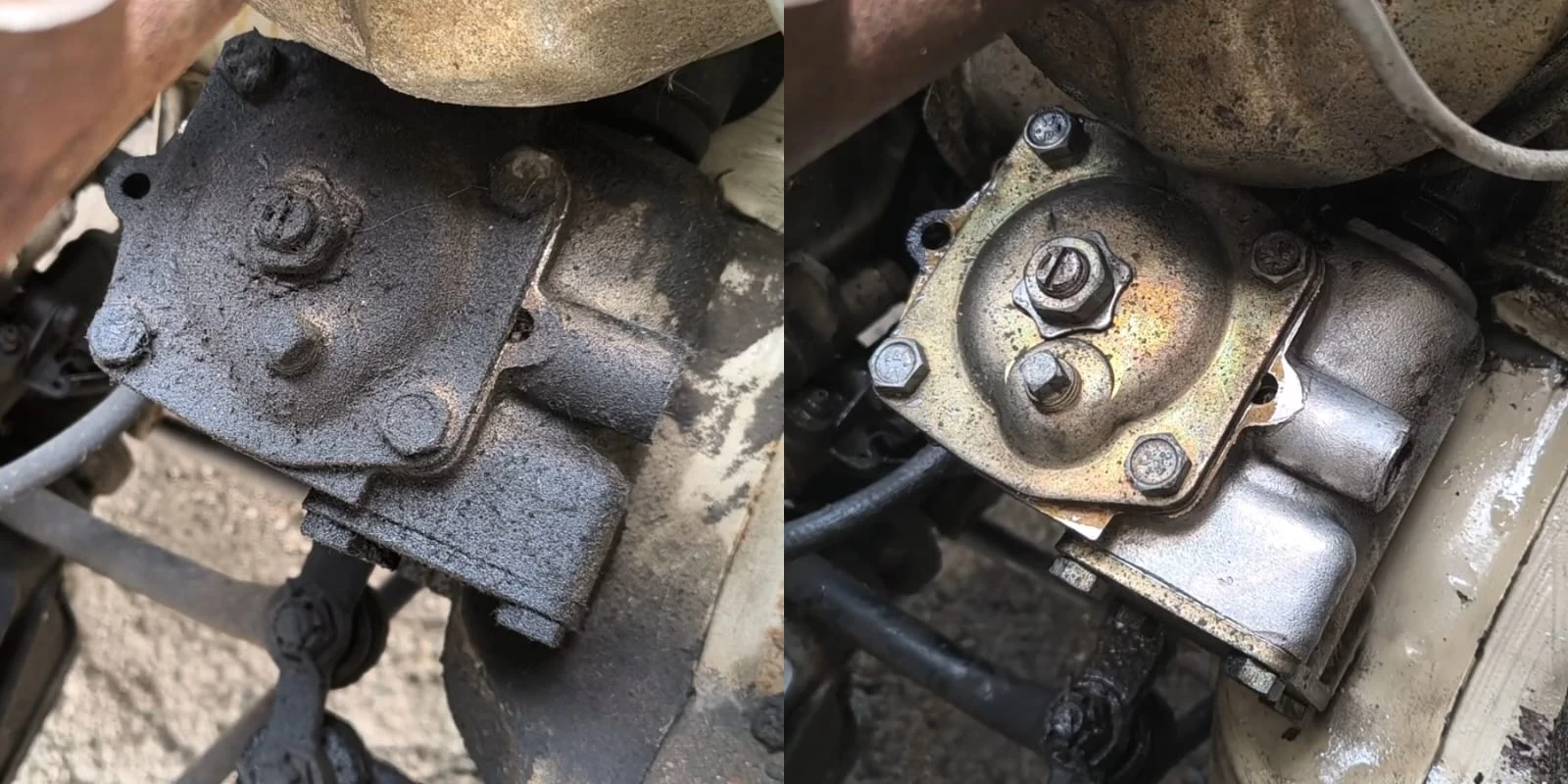
Success stories
Technical steam cleaning in inaccessible areas: effective, safe and sustainable
Project description
An automotive customer needed to clean motors with heavy grease accumulation in inaccessible areas without using water or chemicals that could damage electrical components, while reducing contaminant residues and drying times to optimize operations.

Original situation:
Challenges posed by the client:
Our customer needed an effective solution for cleaning vehicle engines, an environment with numerous nooks and crannies, electrical components and sensitive parts that do not tolerate the use of water or conventional chemicals.
Traditional cleaning methods were insufficient: water could damage electrical and electronic components, while chemical solvents posed a risk to the components, the operator and the environment.
In addition, the client needed to drastically reduce water consumption and eliminate the generation of contaminated liquid waste, a common problem in conventional cleaning processes that requires costly collection and treatment systems.
Drying times after water cleaning also represented an operational bottleneck, as the vehicle could not be started until the engine was completely dry.
The customer was looking for a system capable of reaching hard-to-reach areas, removing accumulated grease and dirt without compromising the integrity of the engine, and also allowing for virtually dry cleaning, reducing downtime and the environmental impact of the operation.
Proposed solution:
Customized steam solution developed by Giconmes.
Proposed solution:
Giconmes supplied a 20 kW electric steam generator (model RGV-0020) equipped with a kit of basic accessories especially suited for this type of application:
- Kit of three bronze brushes D60 steam
- Kit of two small bronze brushes D30 steam
- Steam nozzle
- Turbo nozzle
- Curved lance 900 mm
- Flexible hose with handle, 6 m (20 ft)
The equipment generates steam at high temperature (up to 170 °C) and pressure (approximately 10 bar), which dissolves grease and dirt accumulated on contact, without the need for chemicals or large quantities of water.
The amount of residual moisture is minimal, so the electrical and electronic components of the motor remain safe at all times.
The combination of the different accessories was key to the success of the application.
The bronze brushes, in different diameters, provide a complementary mechanical action to the steam that enhances cleaning in the areas with the greatest accumulation of grease.
The 900 mm curved lance allows reaching the most inaccessible corners of the engine compartment, while the nozzles – standard and turbo – offer versatility to adapt steam intensity and flow rate according to the surface to be treated.
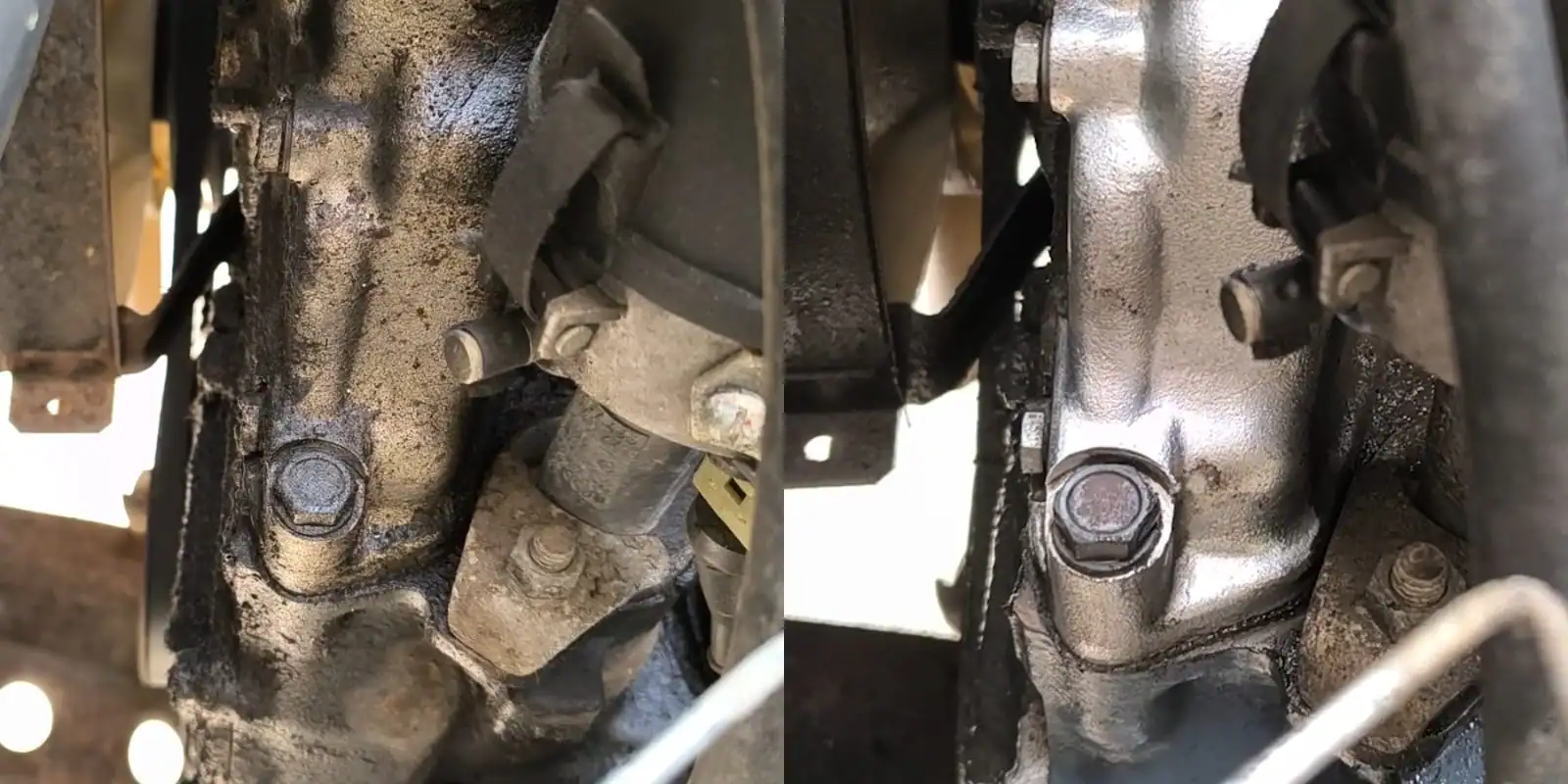
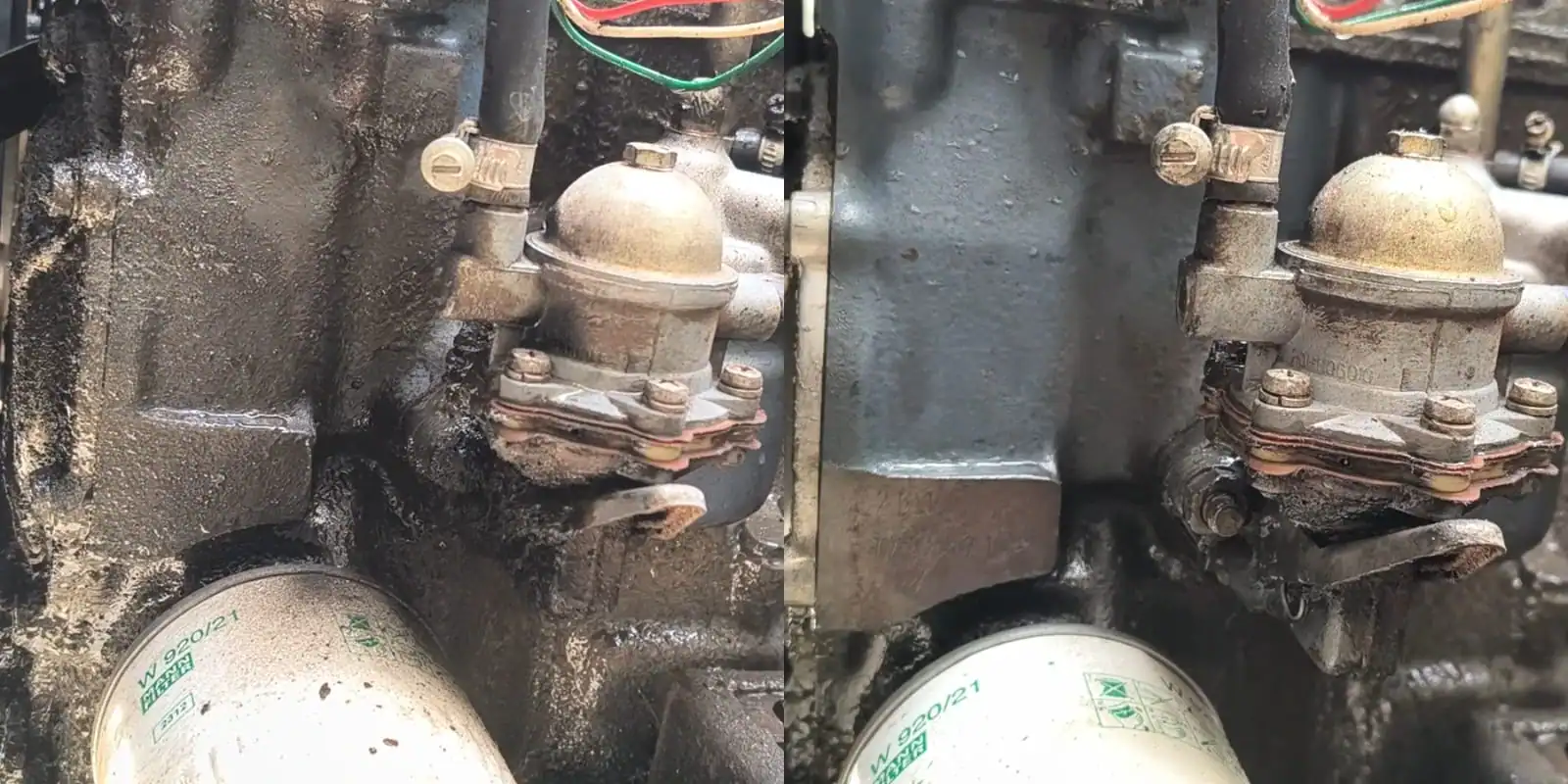
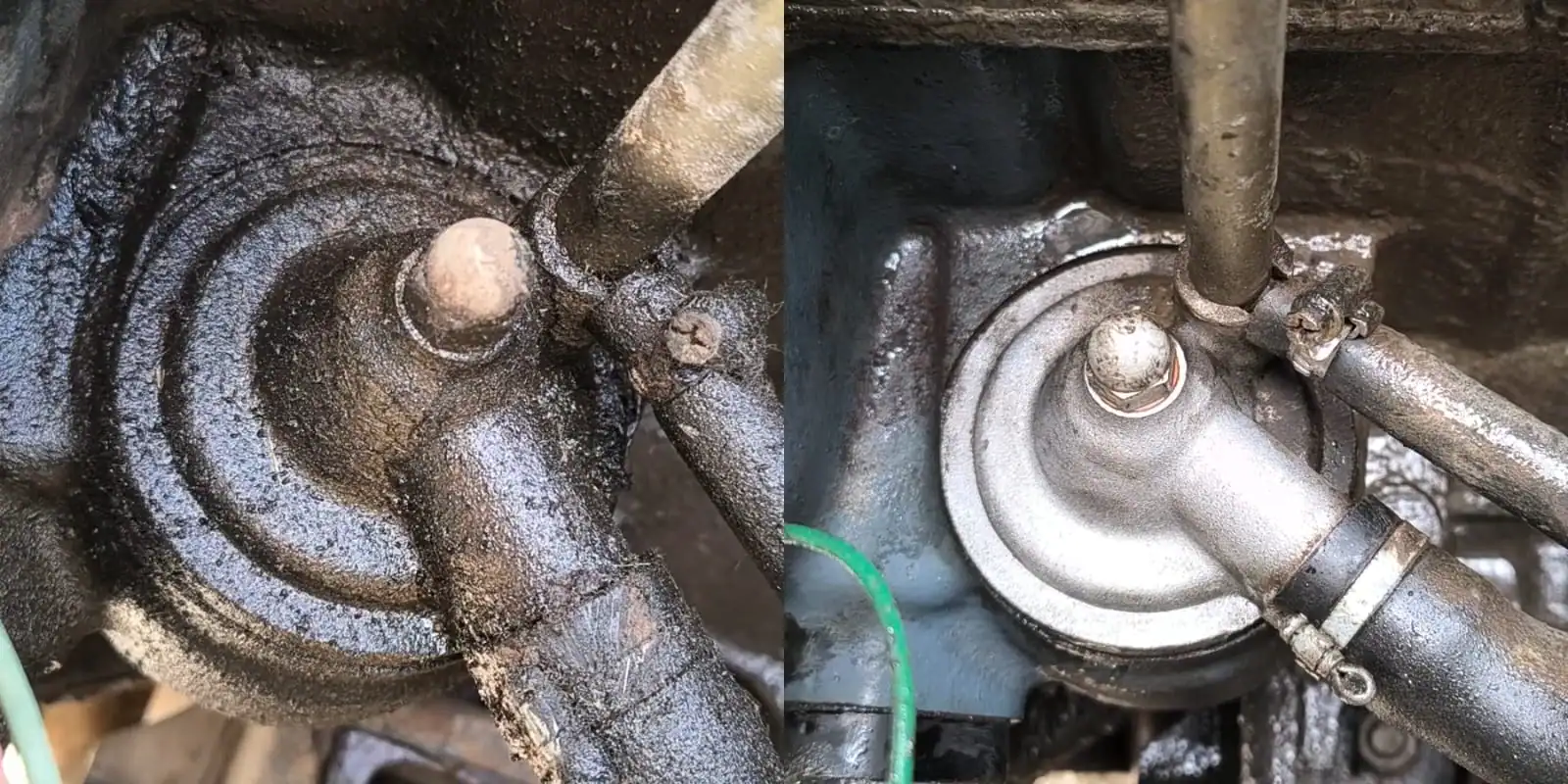
The result is a thorough, fast and visible cleaning in seconds, without disassembly of parts, without contaminated liquid residues and with practically zero water consumption compared to conventional methods.
Technology used:
- 20 kW electric steam generator (model RGV-0020)
- Kit of three bronze brushes D60 steam
- Kit of two small bronze brushes D30 steam
- Steam nozzle
- Turbo nozzle
- Curved lance 900 mm
- Flexible hose with handle, 6 m (20 ft)
CHALLENGES
We meet customer requirements
Solution for the cleaning of vehicle engines that required the removal of grease in inaccessible areas with practically no water or chemicals, protecting electrical components and reducing residues and drying times. We achieved the following results:

Safe cleaning without disassembly –
Steam allows access to hard-to-reach areas without disassembling components, removing grease and dirt without damaging electrical or sensitive motor elements.

Less use of water and chemicals –
The process is carried out with practically zero water consumption, without solvents, avoiding risks for the operator, the electronic components and reducing the environmental impact.

Reduced downtime –
As it is a virtually dry cleaning, drying times are eliminated, allowing the vehicle to be started immediately after the intervention.

No generation of polluting waste –
Steam drastically reduces wastewater production and eliminates the need for collection and treatment systems, simplifying operations and reducing costs.
Do you need a customized solution?
We help you define what type of installation you need
There are no emissions beyond those produced during the electricity production process. Consequently, emissions can be neutral depending on the electricity mix. Electric steam boilers are the present and the future.
Absolutely. In fact, it is recommended to achieve maximum efficiency. There is no problem with remote control as long as it complies with current regulations.
A steam generator is a pressure vessel that, together with the piping network, is subject to regulatory control and complementary technical instructions, according to the regulations published in Royal Decree 809/2021, of September 21. Maintenance is divided into a part that can be easily fulfilled by the owner:
- Know and apply the manufacturer’s instructions regarding use, safety measures, and maintenance.
- Not to put the installation into service or prevent the operation of pressure equipment if the requirements of the Regulation are not met.
- Having at least the following documentation for the pressure equipment while they are installed: Declaration of conformity, manufacturer’s instructions (if applicable), and, if necessary, installation certificate, along with other supporting documentation (such as installation project, record of the last periodic inspection, certifications of equipment repairs or modifications, and any other documentation required by the relevant technical instruction complementary to this regulation). For detailed contents, refer to Annex IV of the regulation. Making this documentation available to the competent authority of the autonomous community and the companies responsible for maintenance, repair, or periodic inspections.
- Use the pressure equipment within its intended operating limits as specified by the manufacturer and take it out of service if it no longer meets the necessary safety requirements.
- Perform maintenance on the installations, pressure equipment, safety accessories, and control devices in accordance with the operating conditions and manufacturer’s instructions, and examine them at least once a year.
- Arranging for the necessary periodic inspections as required by Article 6 of the regulation.
- Having and maintaining an up-to-date record of pressure equipment categories I to IV, as defined in RD 709/2015, of July 24, or equipment similar to these categories according to Article 3.2 of the regulation, as well as their installations.
It is known that by applying heat to water, it transforms into steam at the boiling point and atmospheric pressure. From there, depending on the required saturation degree of steam for its proper application, we need to increase the pressure to obtain a higher temperature. To change the temperature and saturation degree of steam, we always need to modify the pressure.
It is a unit of pressure equivalent to 1 kg/cm2, 0.98 atmospheres, or 14.50 PSI.
Haven't found the answers to your questions?
Please send us a question or download all the information
USES OF STEAM IN INDUSTRY AND OTHER BUSINESSES
Other similar success stories using steam

The use of steam is gaining popularity in several industries due to its efficiency and environmental benefits..
In our "Success Stories" section, you can discover more about companies that have adopted this technology and have achieved successful results in terms of efficiency and sustainability. Click on the success stories to learn more details.
Situación original ¿Qué retos nos planteó el cliente? Un fabricante de ingredientes naturales estaba construyendo una nueva planta de producción y necesitaba incorporar un sistema de generación de vapor limpio capaz de alimentar simultáneamente 4 reactores. Cada reactor requería un caudal de 80 kg/h de vapor, lo que suponía una demanda total de 320 kg/h. […]

Situación original ¿Qué retos nos planteó el cliente? El cliente es una empresa farmacéutica española con una planta de producción y extracción vegetal ubicada en el sureste peninsular. Desde esta planta desarrolla, investiga y fabrica productos farmacológicos y extractos de plantas medicinales con aplicación en los sectores farmacéutico, cosmético, alimentario y nutracéutico. La planta cuenta […]