



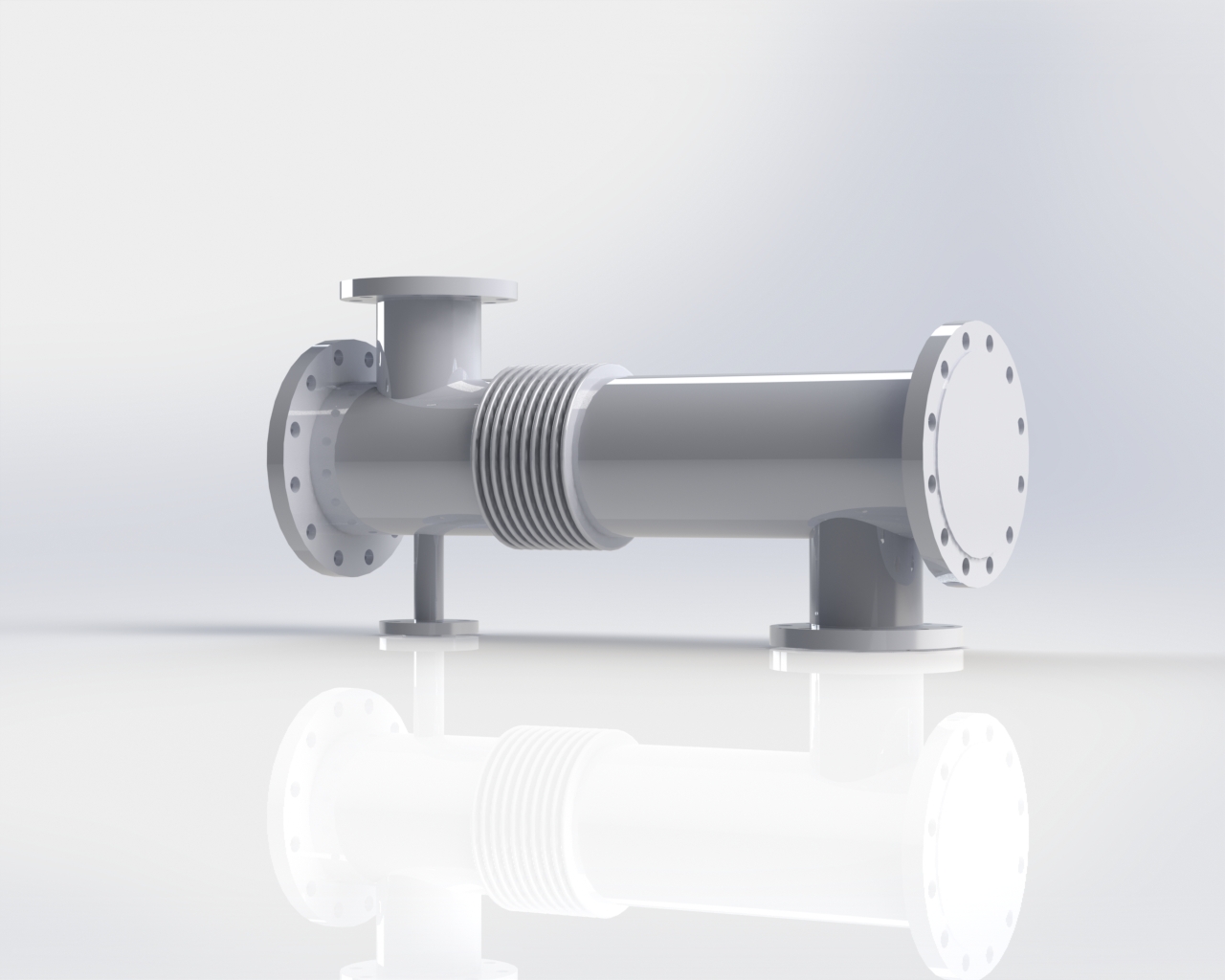

What is a heat exchanger?
A heat exchanger is a device designed to transfer heat from one fluid to another without mixing. They are used in a wide variety of industries for processes such as heating, cooling, condensation or evaporation, maximizing the thermal efficiency of the systems.
How does a heat exchanger work?
The principle of operation of a heat exchanger is based on the transfer of heat between two fluids through a solid surface that separates them. One of the fluids releases heat while the other absorbs it, thus allowing heat transfer without mixing the two media. The most common designs include plates and tubes, where the fluids circulate alternately to maximize the thermal contact surface.
Types of heat exchangers
- Plate: They consist of multiple stacked thin plates where fluids circulate in opposite directions. They are compact and offer high heat transfer efficiency.
- Tube and Casing: Formed by a set of tubes inside a casing, where one fluid circulates through the tubes and the other through the space around them. They are ideal for high pressure and extreme temperature applications.
- Air-to-air and air-to-liquid: Designed to transfer heat between air and liquid, or between two air streams, improving efficiency in ventilation and air conditioning processes.

Tell us about your specific case and we will offer you a solution tailored exactly to your needs.
Benefits, Applications and Technical Considerations
Heat exchangers offer high energy efficiency, allowing heat to be recovered and reused in industrial processes, which translates into significant savings in operating costs.
In addition, its versatility allows its use in diverse applications, such as the petrochemical industry, power plants, heating, ventilation and air conditioning (HVAC) systems, and the food industry, where its ability to handle large volumes of fluids in a controlled manner and without cross-contamination is essential.
In terms of technical considerations, it is important to select heat exchangers made of corrosion-resistant materials, such as stainless steel, to withstand the extreme temperature and pressure conditions.
Proper maintenance is crucial to ensure optimum performance and prolong equipment life, avoiding the accumulation of debris that can affect efficiency.
It is also essential to ensure the compatibility of the fluids involved to avoid damage or internal corrosion in the system.